

THE PUNCH • IMPACT STORIES
Altarize
Innovation in Action
Words & Photography by The Punch
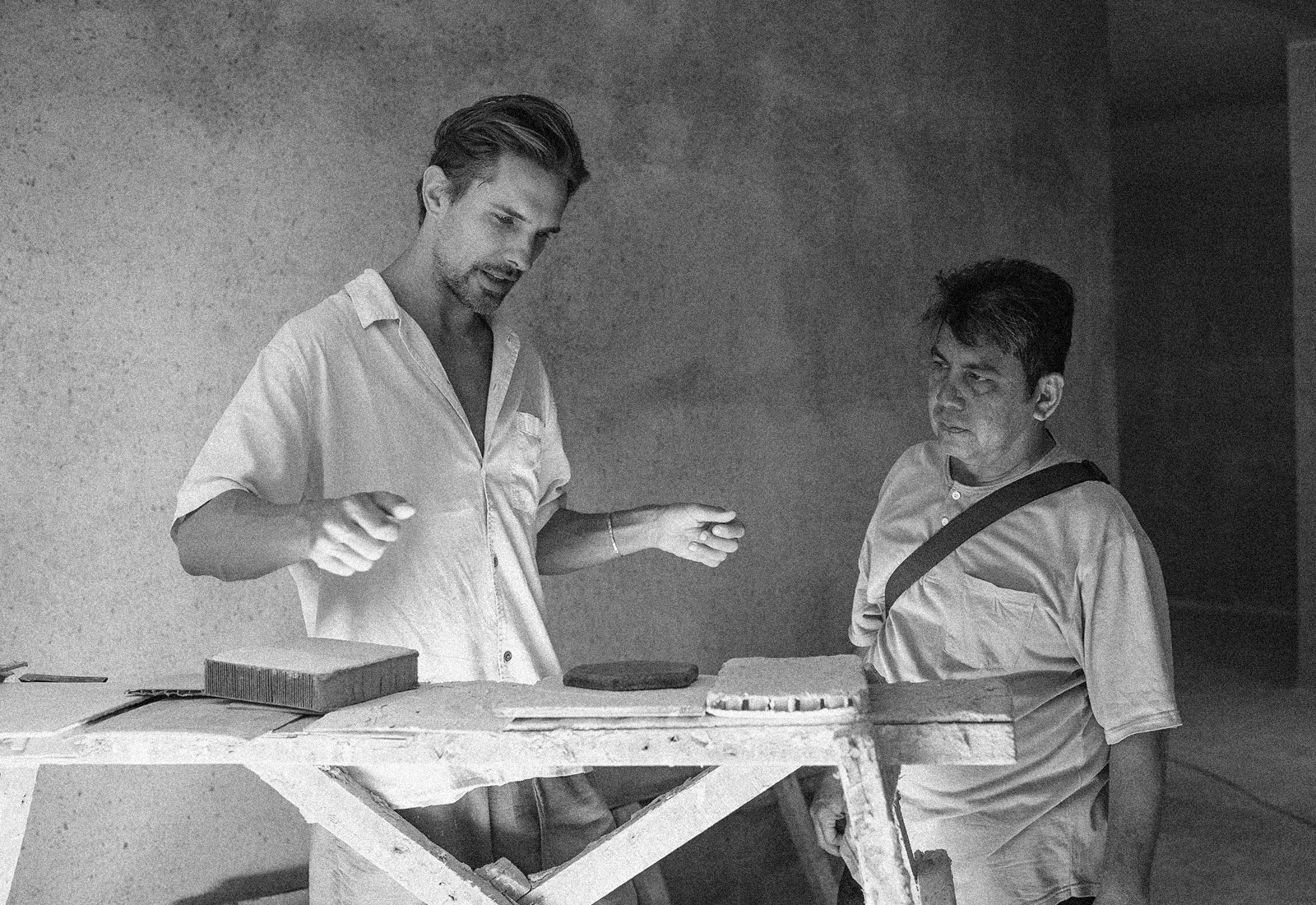
Tobi Klanner grew up between two worlds: his mother and grandmothers were artists, his father and grandfathers engineers. He studied engineering in Munich while working at BMW and Osram, but part of him felt unnourished, so he turned to fashion and photography. Seven years of travel across Asia and Australia followed, without a fixed address. Along the way he saw the destruction of nature, overconsumption, poverty and waste, and felt "a desire to leave a lasting, positive impact."
That calling brought him to Bali, where he went back to basics, learning permaculture and fermentation, making his own clothes, building his own house from what he could find and living plastic-free. He co-founded CoLabCo, a sustainable technology incubator, and the more he worked with natural materials, the more he saw the damage done by conventional building. Altarize grew from that concern. Tobi calls construction "one of the world's most destructive industries."
Altarize sets out to reshape it with healthier, lower-carbon materials. Its lime- and clay-based plasters, renders, paints and floors are made from minerals and recycled waste, breathable, low-emission and built for the tropics. Inspired by traditional knowledge, they are designed as practical, drop-in alternatives to cement-based materials and petrochemical paints. Its commitments remain the same: better choices, global equality, support for affordable housing, and transparency and integrity. What began with dozens of villas, hotels and restaurants has grown to more than 1,000 completed projects and over 300,000 m² of material applied, and the next step is complete buildings, made "in complete harmony with nature".

SOURCING WITH PURPOSE
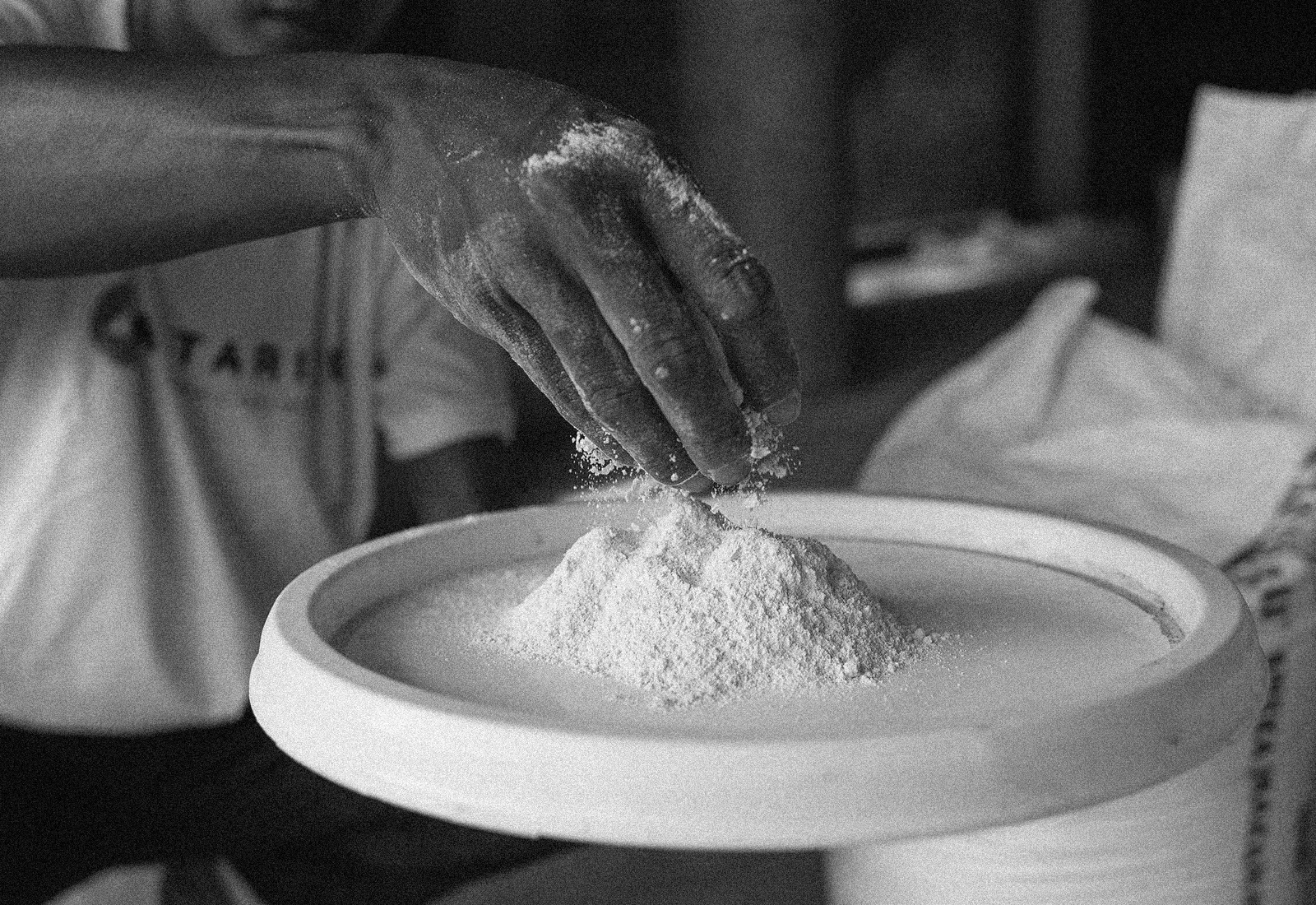
Altarize chooses its materials deliberately: local, and suited to the tropics. Lime and clay, used for thousands of years, sit at the heart of its products for their durability and self-healing qualities, supported by limestone, mineral fillers and the volcanic minerals of Indonesia's landscape. About 98% of its raw materials are sourced within Indonesia, and 60–70% come from Bali itself. "We want both to minimise the materials that have to be brought in from abroad and to maximise what can be sourced locally," Tobi says.
Just as important is what Altarize rescues. Recycled glass, ceramic and tile waste, reclaimed stone and crushed mineral residues replace virgin sand and aggregate, which helps clean the island, protects rivers from sand mining and gives designers freedom of texture and colour. Natural and agricultural fibres, including sawmill residues, rice husk and coconut coir, are woven into high-performance composites, with corn and other crop residues under development. In 2025 alone, Altarize transformed about 130 tonnes of mineral waste and 50 tonnes of agricultural residues into building materials. "In nature, there is no waste," Tobi says, a lesson he first learned from his grandmother.

BUILDING EMPOWERMENT
For Tobi, Altarize is not just a business; it is a way to create change for both the environment and people. It is set up as a social enterprise. Every step avoids toxins and the harmful sanding practices that put workers' health at risk, and the aim is a workspace that is "safe, clean, and inspiring," where everyone can prosper.
Today the team numbers about 250, and 99% are local. Training combines structured instruction, hands-on apprenticeships, supervised site experience and quality-control feedback, and team members can grow from entry-level roles into colour development, project supervision, quality control, production management and research. Support goes beyond wages: meals, healthcare and insurance, housing assistance where needed, and interest-free loans for important personal and family needs. Tobi uses a flat salary structure to build a sense of shared purpose, and allows flexibility as long as quality stays high.
The vision reaches well beyond Bali. Altarize has trained more than 500 workers and applicators, including in Sumatra, Sumba and Lombok, and is working towards partnerships with local craftspeople and community-level micro-economies. Its goal is a self-sustaining business in which workers excel in their trades, move into leadership and, one day, run businesses of their own. "I hope they will have been able to grow in a healthier and more dignified way," Tobi says, "feel proud of their accomplishments and become mentors within their own communities."
It has not always been easy. Finding reliable workers and keeping quality consistent across Bali's geography takes daily effort, and aligning work ethics takes patience. Altarize grew completely organically, without external funding. "In hindsight, I probably would have reached out for support and financing a little earlier," Tobi admits, "but that path taught us invaluable discipline."


REDEFINING PROGRESS THROUGH CHALLENGES
Bali's rapid development creates obstacles, and shortcuts often weaken the integrity of projects. "From the beginning, it was obvious to me that the system was broken," Tobi says. "Waste was everywhere. Sand mining was destroying nearby river systems. Construction quality was often far below international standards, and many of the cement-based materials being used would begin cracking within weeks." Tropical weather, seismic activity, seaside exposure and limited training for labourers add to the challenge.
The human cost is the most disheartening. Many construction workers, often from across Indonesia, are poorly paid, live in substandard conditions and see their families only a few times a year. Many work with toxic materials and without protective gear. The environmental cost is just as real, with toxins entering waterways and the air, and sand mining and heavy trucks damaging ecosystems. Without intervention, the island could be reshaped beyond repair.
Altarize is a direct response. Its materials are non-toxic, made with recycled aggregates in place of virgin sand, and designed for Bali's conditions. Selected products achieve around 60–90% lower embodied carbon than conventional alternatives, depending on the product and baseline. Its workers receive fair wages, meals, healthcare and insurance support, training and a clear path to grow. "A sustainable material should not need to be accepted as a compromise," Tobi says. "It should perform better, create greater value and offer people a compelling reason to choose it."
INNOVATION & DURABILITY: ALTARIZE'S EARLY WINS
One of Altarize’s early projects was a modest house built with walls and a roof made entirely from recycled cardboard, later finished with Altarize’s signature materials. Three years on, it still stands strong, proof of how durable, sustainable spaces can be made at lower costs. Another standout success came with their innovative insulation techniques. By retrofitting a roof with an insulation layer, Altarize reduced the surface temperature by over 30 degrees. This simple adjustment allowed the home to stay cool with minimal air conditioning, sharing the potential to not only create efficient homes but to contribute to cooling down entire urban areas.
Since then, the wins have multiplied: more than 1,000 projects for private homes, boutique hotels and developments across Bali, Lombok, Jakarta, the Mentawai Islands and Thailand. Life-cycle assessments have been completed for key material systems. Altarize now runs seven active research initiatives, including AgriCycle, a platform for turning agricultural waste into building materials, and its first stream, CornCycle, which explores corn-based walls, blocks and panels. With Green School, Bamboo Pure and architect Frank Burridge, it is building a biomimicry laboratory with almost no cement or steel.
HOLDING ONTO HOPE
For Tobi, hope is a quiet resilience that holds steady amid great change. Bali's rapid overdevelopment is a difficult period, with infrastructure struggling to keep pace, but he remains optimistic that some new developments are moving in the right direction, and believes systems tend to correct and rebalance over time. Bali has limits, and as they are reached, the pressure may itself drive positive change.
That future depends on responsibility, shared by locals and newcomers alike. "It is entirely up to us as humanity to ensure that these places continue to flourish and thrive in the future," Tobi says. Businesses, with their greater leverage, carry a particular responsibility. "Only by collaborating and shifting our priorities away from short-sighted maximum extraction and towards a holistic, long-term and regenerative mindset can we make the world more beautiful for many generations to come."
His own next steps are concrete: prototype buildings made from agricultural and mineral waste, then decentralised production hubs in regions such as Lombok and Sumba that turn local waste into materials and jobs. Beyond that lies a model that could be adapted across Southeast Asia. For Tobi, hope is trust that progress and preservation can coexist, and that, in an age of automation and AI, making things by hand, with intention and love, will matter again.
EXPLORE THE PUNCH
Celebrating Remarkable
Businesses with Impact